Browse Items (453 total)
Sort by:
Saving the Future in Europe
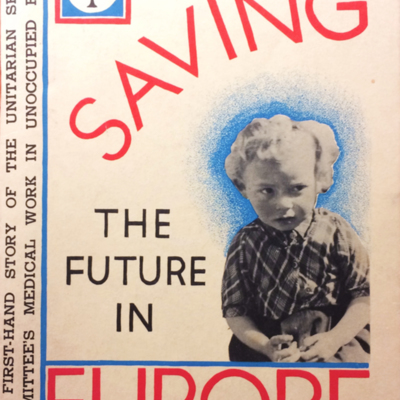
This is the cover of a publicity pamphlet, most likely distributed to USC donors. The pamphlet entered the Harvard University Library collection on October 31st, 1942. The ~50 page document illustrated the work of the USC's medical clinic in…
The Marie Curie-Sklodowska Institute in Warsaw, in 1945 and 1947, Reconstruction
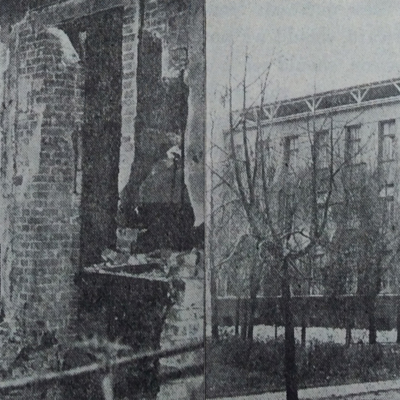
Marie Curie, with friends family, and governmental support, was able to set up the Radium Institute in Warsaw. "A prominent group of American women, close friends of Madame Curie and devoted to the cause of America's fight against cancer, donated one…
Coal Mine at Walbrzych, Silesia.
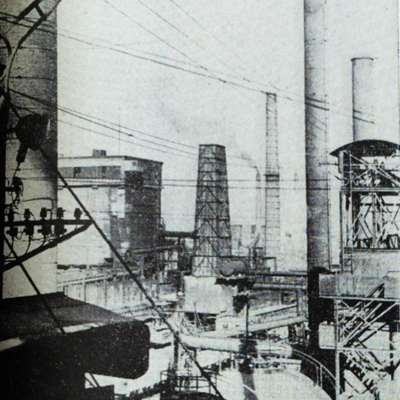
This image of coal mining in Walbrzych, Silesia (a town a little over 250 kilometers from Piekary, and belonged to the German territory that was given to Poland after the war) accompanied an article illustrating "Life in Silesia," specifically…
A Cordial Reception (for American Scientists visiting Poland)
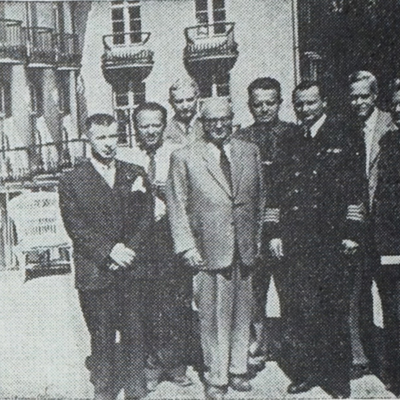
Illustrating an article entitled "American Scientists Visit Poland," the image / text was authored by Dr. Bronislaw Zawadzki, Assistant Professor of Physiology at the Medical School of Warsaw University. The trip was sponsored by UNRRA and arranged…
The New Poland: Map of industries.
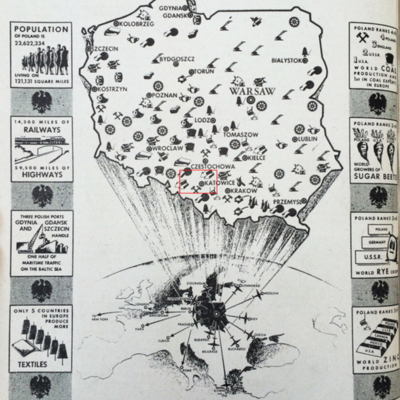
Designed by Pick S. of New York for the Library of the Polish Embassy. Besides illustrating, graphically, where various Polish industries are located and the destinations of Polish exports, various statistics about Poland demographics and how Polish…
Poland exports her coal
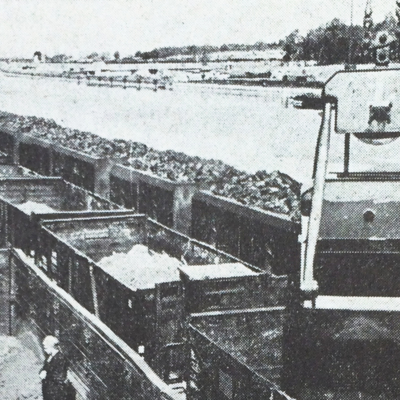
The greatest export in the years immediately after World War II in Poland was coal. Ships leave for various European destinations from the ports of Gdansk, Gdynia, and Szczecin.
High-tension networks, electric grid, Poland 1946 - 1048
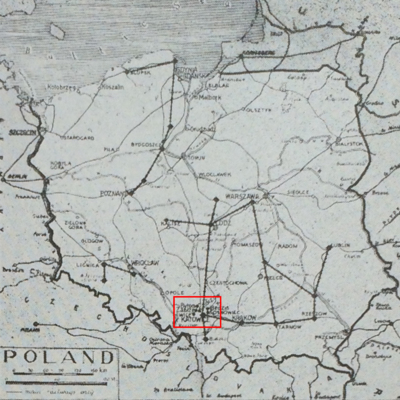
The importance of coal in the Silesian region cannot be under-estimated. One of its uses was for electricity generation, with the first generation of high-tension power lines planned as shown on the map.
Copernicus Monument in Warsaw, 1946
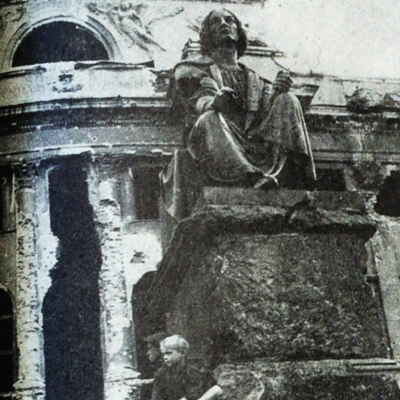
The statue of Copernicus stand amidst the rubble of post-war Warsaw, with two boys sitting on its pedestal. Symbol of Poland's / scientific establishment's fame and resilience.
Warsaw 1939 - 1945, Page from Magazine
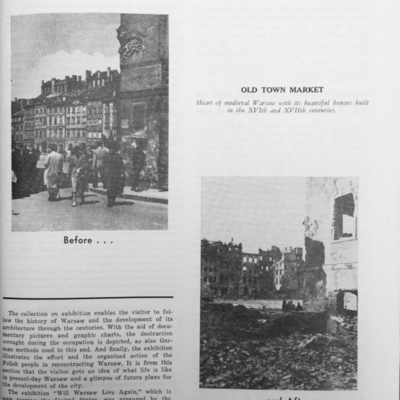
A page layout from Poland of Today